
3.b.2. Criticism of Darwinism
According to the Darwinian Theory, the cause of evolution is natural selection derived from the combined effect of random mutations and the adaptation to the environment.
There is a brief description of this theory in chapter 9.
Despite its general acceptance, it has posed quite a few problems from the scientific point of view, and there has always been significant criticism of Darwinism.
Before the enumeration of the chief critics, there is an analysis of why it beat the theory of Lamarck. After the cited count, we will discuss the current difficulties for its rejection at the end of this section.
In the second half of the 19th century, humanist rationalism extended into all scientific circles and found itself at full peak. There were already sufficient indications that the Earth was much older than previously thought; the human being's position in the planet's history needed a scientific theory.
Of course, the new theory had to comply with a seemingly logical condition; it had to remove radically the religious ideas that had hindered the scientific development so much. The scientific community had not forgotten the old problems of Galileo and Miguel Servet. Let us hope they always remember!
The Theory of Lamarck seems very logical and reasonable, but it suffered a problem: it offered a leading role to the life outside the human dimension. There was something inside the plants and animals that improved when faced with environmental hitches.
On the one side, the powerful influence of the religious ideas still existing today could not lose a monopoly of spirituality. On the other hand, the scientific community would not openly struggle to shift consciousness and intelligent life to living organisms on an internal scale but different. Although it makes sense, there was not any scientific proof of their existence. In this case, we could talk about the thesis, antithesis, and synthesis; any theory that could resolve the era's contradictions with a minimum rigor would undoubtedly triumph.
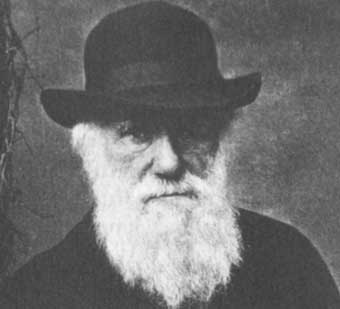
In this context, the Darwinian Theory emerged, showing the effects of the species' evolution; there was no reasonable doubt that man descended from the ape. That we know of, no one has questioned it outside of the strictly religious realm, such as the Creationist Theory. Currently, even the predominantly religious confessions do not pose a sharp criticism of Darwinism.
Another aspect is that the title of Darwin's work comes about the evolution of species and not life evolution, for which it avoids having to define life. It is a problematic concept because it is unclear whether life has a scientific or rather philosophical nature.
The aim is not to deny or diminish the enormous contribution of Darwin's theory to modern thought in anthropology, but rather to make a positive criticism delimiting its extension to avoid defective implications in society's development. It is worth pointing out that any theory of evolution has many consequences on philosophical and social thinking that pervade any number of individual attitudes and acts; for example, different approaches to particular problems of social justice or efficiency of the educational system.
In addition to the weaknesses noted below, section “6. Empirical evidence” lists experiments that contradict Darwin's theory and others that support the Conditioned Evolution of Life.
Weak points of Darwinism are numerous and interrelated; nonetheless, they are in order of importance from a methodological perspective even if it means to repeat some topics while presenting problems of a different nature:
-
Natural selection tries to explain the disappearance of non-optimal genetic modifications by lesser, or lack of, the adaptation of individuals to the environment. Conversely, it does not say anything about the origin of variations.
This argument implicitly denies or limits the slightest expression of the very concept of evolution, given that the new beings have the same genetic information as to their ancestors with supposed mutations that can have a positive or negative effect.
The evolution process is not in the genetic information changes but rather the non-continuity of the less favorable changes. There was no biology knowledge at the time, but they knew that something goes from one generation to the next.
Likewise, they indirectly assumed that where there is no natural selection, there is no evolution.
The second issue of criticism is that the main argument of natural selection, "what exists is because it has survived and has not disappeared," is a tautology. The only possible criticism is to point out the total lack of scientific severity in it.
NEWS ABOUT THE THEORY OF EVOLUTIONThe Spanish mountain cats, direct descendants of the wild cats of 20,000 years ago, see better during the day than the domestic cats. The relevance lies in proposing a new mechanism of rapid adaptation of the species in very few years (between 15,000 and 20,000) in evolutionary terms.
The adaptation of animals to their environment occurs using the death of specific cells, in this case: neurons, during the second half of fetal development.
El País 15-01-1993. Journal of Neuroscience
-
This model only works in the long-term or for many generations and eliminates short-term evolution. That is how some ideas emerge, like the Homo sapiens since the beginning practically had the same intellectual capacity as nowadays, unnaturally intensifying the problems of random evolutionary leaps.
-
Implicitly, the Darwinian Theory accepts the randomness of genetic modifications, hence the name of random mutations, denying the existence of a real driving force of evolution without any scientific proof, when logic appeared to indicate the contrary. The lack of evidence is an exact issue of the criticism of Darwinism.
NEWS ABOUT THE THEORY OF EVOLUTIONComplete sequencing of the small human Y chromosome
The surprise has been that a fourth is long palindromes: genetic sequences that read equally from left to right as the right to left and consist of two arms.
The investigators think the palindromes, which contain all of the testicles' genes, allow the interchange of information within the same chromosome. Thus, the mutations repair or transmit.
El País 21-06-2003.
Darwin did not scientifically show the randomness in all genetic information variation cases, nor was it shown later; it became an axiom.
As far as we know, modern Neo-Darwinism still has not told us which specific statistical distribution follows random mutations; it could be the uniform or normal distribution, that of Poison or that of Fisher. Without a doubt, it is a great secret of science or a metaphysical mystery.
Under certain assumptions, the method of evolution using random mutations or modifications can be acceptable. We know some bacteria produce different bacteria in a tiny proportion. If there were a change in environmental conditions, such as acidity, those bacteria would survive. After numerous generations, these bacteria would make up the new population. At the same time, it would produce a tiny amount of the first bacteria that, where appropriate, would again allow the survival of the species.
The example tries to prove Darwin's theory but is only a particular case in which generations change rapidly, with enormous descendants.
NEWS ABOUT THE THEORY OF EVOLUTIONThe mysterious origin of the resistance of bacteria
It is unknown yet from where the bacteria borrow genes to make themselves resistant to antibiotics. The search results for these genes on different grounds have shown to be negative, as explained by Professor Jorge Laborda.
El País 24-11-2010
Neo-Darwinism's argument is not free of criticism since the attempted random mutations are not accidental modifications of elemental letters or DNA units. They could easily be modifications allowed only in one or various DNA parts, making up an efficient set regarding the new being's characteristics and preserving the structural code in its totality. The existent mechanism of natural selection does not itself deny other methods to create the diversity of descendants.
For some reason, natural selection fails to eliminate the supposedly least adapted variant since this evolutionary line does not disappear maintained as the same example shows.
Darwinism’s criticism is another severe issue because after taking as proven mutations are random, academia accepts the opposite. The random mutations within groups with specific points would be utterly incompatible with the first randomness so previously established according to the scientific method.
In its day, there were criticisms of Darwinism about its lack of the scientific method; definitely, it is a theory supported by inductive reasoning from the observation of particular facts and making general inferences.
The inductive reasoning is perfectly valid, but the generalization it makes should comply with specific requirements. One of the conditions is that if one example does not satisfy the theory, it implies its refutation. Let us cite the following cases:
Genetic changes obtained by new techniques are not random but guided; moreover, the mechanism of natural selection is not bringing about the appearance of the new beings, like in the agriculture field. We could argue whether these changes made by humans are natural or not, but we have to keep in mind that humans, except for contrary evidence, make up a part of nature just as viruses do.
Likewise, we are aware that viruses make changes in the invaded cells' DNA to reproduce themselves. It would not be surprising if they could perform another type of change, such as cheating the immune system in the future, or that the reactions would not transmit in the genetic sphere as a defense against these aggressions.
-
Recently, new experiments in evolutionary genetics ** openly contradict the updated Darwinian Theory. They are so numerous we cannot mention all here. Throughout this book, some of them are literal quotes from biology news, appearing after the initial formulation of the general theory of the Conditional Evolution of Life –CEL– in 1990.
NEWS ABOUT THE THEORY OF EVOLUTIONMore than 200 identified human genes seem to be the result of the horizontal transference of the genes of bacteria (without passing through another organism in the evolution)
El País 19-02-2001. Conference of the American Association for the Advancement of Science
The theory has significant shortcomings when it comes to explaining reality. Darwin tried to give sexual differentiation a broader sense than the pure specialization of specific tasks because he sensed the necessity. However, he could not explain, except saying it exists because it is one of the best evolution methods.
Of course, it does not explain why the descendants of very genetically close individuals, such as siblings, are not feasible or present severe glitches in superior animals.
It seems sexual selection, about which Darwin wrote a book, goes conceptually against natural selection. The first one tries to explain the evolutionary changes, while the second one implies eliminating random modifications for efficiency reasons.
Any farmer knows the preeminence of sexual selection versus natural selection. It makes sense Darwin needed to go to Galapagos Islands to convince the public about the non-relevance of sexual preference; naturally, no farmer could correct him because they were not in the Galapagos Islands.
The irony of life is that present engineers, farmers, or cattle dealers denominate natural selection to sexual selection of stallion or seed. Undoubtedly, it must be another conquest of common sense.
Another critical shortcoming is the almost impossibility of producing the typically called evolutionary leaps; it is difficult to logically argue a change in genetic code's basic structure through mutations. The only option is to resort once again to long-term evolution with the added advantage of automatically lose the temporal notion. However, the very concept of evolutionary leap impedes using the long-term in evolutionary terms.
NEWS ABOUT THE THEORY OF EVOLUTIONThat fusion of two bacteria occurred first, and later the mitochondria were added.
The more significant evolutionary leap in the Earth's history is from prokaryote to eukaryote. The differences are enormous, and the shift is very sudden.
El País 14-03-2001
-
A discussion of other aspects related to sexual differentiation and evolutionary leaps is in the section about objectives of evolution; they belong to the central argument of the CEL and are absent in the Darwinian Theory. It makes sense due to the time difference of both. However, neither the Neo-Darwinian Theory nor the Modern Evolutionary Synthesis says anything on this matter. Quite the contrary, they do not exist because life in the scientific realm has no objective and does not make any sense.
Given previous premises of criticism of Darwinism, there should be strong reasons to persist throughout the entire 20th century with the discovery of Mendel laws and conceptual modifications contributed by Neo-Darwinism and others like the Modern Synthetic Theory. These modifications suppose an update of the Darwinian Theory to avoid being incompatible with new scientific discoveries. Thus, the theory is the same for the general population.
The reasons are those that allowed acceptance. A scientific theory should be independent of any philosophical or religious approach. Nowadays, to refute the Darwinian Theory, academia should admit the severe mistake in embracing a so weak evolutionary theory along the 18th, 19th, and 20th centuries. Once more, the sociology of science of Thomas Kuhn is right when saying the scientific method is not foolproof.
The novelty of the Conditional Evolution of Life –CEL– considers evolution as an internal improvement mechanism of living beings that, given the complexity of problematic aspects, uses multiple systems, methods, or processes, depending on each case according to its specific conditions.
For a large part of society, acceptance of CEL or any other evolutionary theory assuming internal improvement mechanisms would mean a step back. Regardless of the scientific method application, recognizing an intelligent or teleological evolution guided by the very interior of living beings sounds like a religious idea about life. It distorts the distinction of the human being (is this not religious?) and attacks the delightful anthropocentrism; in other words, it is unacceptable on principle.
Another significant part of society maintains its religious ideas, and as a result, some comments of the previous paragraph are equally applicable; again, it is unacceptable on principle.
In other words, the Theory of Darwin is very convenient socially speaking and has an active idealist component; denying short-term evolution does not compromise embedding of some genetic traits related to the desired equality of opportunities. Consequently, Academia makes efforts to keep evolutionary theory’s essence.
A different matter is that science considers the unknown random, even against logic. Although this tendency has changed with chaos theory and fractal structures, it is contrary to the butterfly's famous example.
The lack of satisfactory explanations of previous points 7) and 8) allow methodological criticism of Darwinian Theory's essence within biology and genetics despite better comprehension of sexual differentiation concerning its effects on germline evolution and sexual equality in society.
There have always been authors against the leading vision in evolutionary theory, although they have not managed to formulate an alternative set of ideas capable of shifting it. On the other hand, the expression of their thoughts could convey a professional marginalization and even considered close to certain ideologies that have nothing to do with one or another scientific option; without a doubt, this is due to the imaginary philosophical or social repercussions. Anyway, the reality is not going to change with a better understanding.
The authors’ list would be too long. Let us cite distinguished English geologist Adam Sedgwick (1785-1873). Regardless of his attack on Darwinian Theory for religious reasons –educated in the Creationist Theory, which was dominant in his time–, after reading Darwin's theory, he expressed:
"You have deserted –after a start in that tram-road of all solid physical truth– the right method of induction."
Despite his creationist education, Adam Sedgwick did not oppose evolution or development in its broad sense. He believed that the Earth was ancient, as Darwin recognizes in his notes from Sedgwick's lectures at the university.
However, Adam Sedgwick maintained that evolution was a fact of history, and he believed in the divine creation of life during long periods. Darwin's theory's notable objections were the evil and greedy character of natural selection and the scientific method's abandonment.
The Conditional Evolution of Life understands that natural selection is just one evolution method, but it is neither unique, nor general, nor the most important. From a conceptual perspective, this method occurs after the genetic information changes that allow the actual evolution.
The CEL will suffer the risk of being a creationist when criticizing Darwin and racist when talking about intelligence's inheritance as a recurrent example. Let us defend the case because it has been the cause of theory development; therefore, the intention is not to attract attention intentionally. Moreover, it is not easy to design models of evolution that can be statistically confirmable.
The article Studies on the evolution of intelligence discusses the EDI Study with its incredible results confirming the Conditional Evolution. Besides, the Darwinout and Menssalina are experiments to verify the scientific theory's extremes, with a much more straightforward methodology than The EDI Study.